
An 8-Week Balance and Falls Prevention Plan That Builds Real Confidence.
If you’ve noticed you feel a bit less steady than you used to, you’re not imagining it. After 40, balance can quietly drift if we don’t challenge it. It might show up as a wobble when you put on socks, a “catch” on uneven ground, feeling cautious on stairs, or that little jolt of panic when you trip but just manage to recover.
Here’s the good news. Balance is trainable at any age, and you don’t need fancy equipment or risky exercises. The best programs combine three things: stability practice, leg strength, and confidence-building exposure to everyday movements. The plan below is an 8-week progression you can follow, and it’s structured so you can build steadily without feeling overwhelmed.
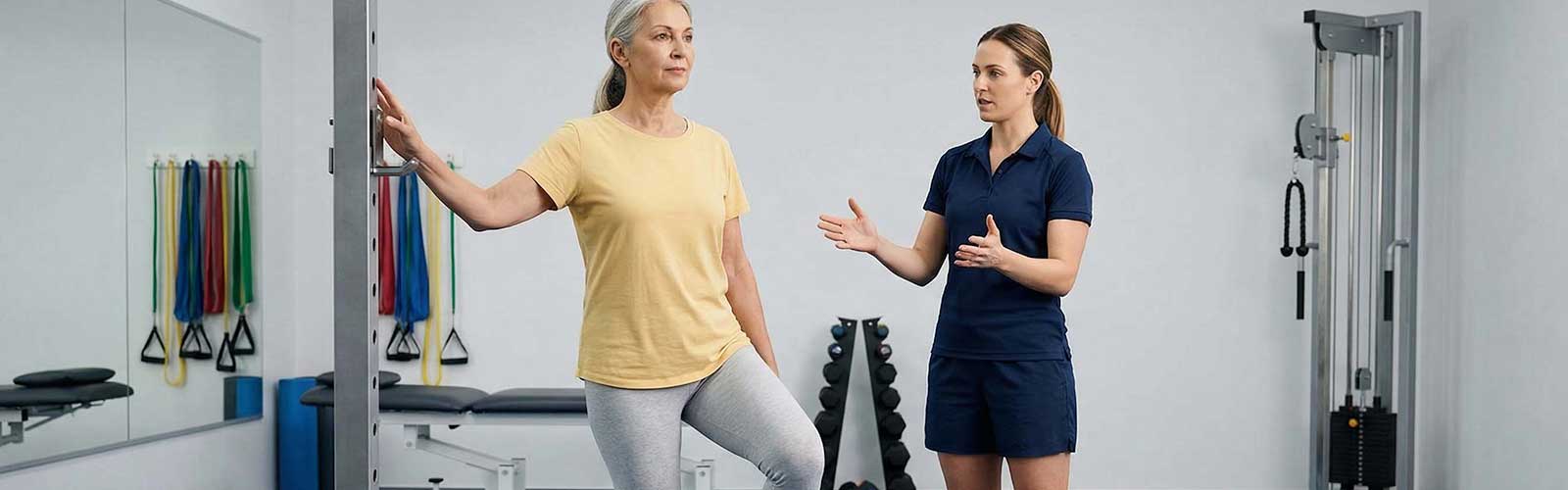
Why balance changes after 40
Balance is a mix of strength, joint mobility, coordination, vision, inner ear function, and quick reactions. When we move less, sit more, or stop doing tasks that challenge us, the system gets rusty. Leg strength is a huge factor, especially through the hips, glutes, quads and calves. If those muscles aren’t doing their job, balance becomes harder and the body starts to rely on stiffening up, which can actually make you more unstable.
Balance also depends on how well your feet and ankles sense the ground and adjust. Supportive shoes are great, but if you never train barefoot control or ankle strength, that feedback loop can dull over time.
The aim of a falls prevention plan isn’t to make you fearless overnight. It’s to build capacity, then progressively challenge the system in a safe way so your body learns to recover quickly from wobbles.
How to use this 8-week plan
You’ll get the best results from two short strength sessions per week and four to six mini balance sessions spread across the week. The balance work is quick, and that’s the point. Your nervous system learns through frequent, low-risk practice.
Use a stable support like a kitchen bench or rail to start. You’re not cheating by holding on. You’re building the pattern first, then gradually reducing support.
A simple rule that keeps this safe is that the challenge should feel like effort, not fear. A small wobble is good. A near fall is too much. If you feel unsafe, bring the difficulty down and rebuild.
Your baseline check before you start
Pick a simple measure you can repeat weekly. Try a single-leg stand near a bench and time how long you can hold without grabbing. Do it on both sides. Note how it feels, not just the seconds.
You can also time a sit-to-stand test from a chair and note how many controlled reps you can do in 30 seconds. This isn’t about smashing yourself, it’s about tracking progress.
Week 1–2: Build the foundations
These first two weeks are about waking the system up and building steady legs.
Aim to practise balance most days for five minutes. Start with feet together stance and then a staggered stance, focusing on tall posture and slow breathing. Add gentle weight shifts side to side and forward and back. The goal is to feel the feet on the ground and let the ankles do the work instead of clenching everything.
For strength, focus on sit-to-stands from a chair, controlled step-ups onto a low step, calf raises holding a bench, and a simple hip hinge pattern to wake up glutes and hamstrings. Keep the range comfortable and the tempo slow.
For confidence, add a short daily walk. Choose flat ground and a pace you can maintain without feeling rushed.
Week 3–4: Narrow the base and build single-leg control
In weeks three and four, we narrow your base of support and start building stronger single-leg stability.
Progress your balance work to tandem stance, one foot in front of the other, near support. Add head turns and gentle reaching tasks, because real life involves looking around while you move.
Begin short single-leg stands with light fingertip support. You’re aiming for quality rather than long holds. Add step-down control from a low step and marching drills where you pause for a second at the top of each knee lift.
For strength, increase sit-to-stands by adding a slower lower or a slightly lower chair height if it’s safe. Progress step-ups by adding a little height or an extra set. Keep calf raises steady and controlled.
Week 5–6: Dynamic balance and real-world movement
This is where balance starts feeling more practical. You’ll begin moving your base of support and reacting to small changes, which is what prevents falls in real life.
Introduce obstacle stepping by placing small markers on the ground and stepping over them slowly. Add direction changes during walking, like gentle figure-eights. Practise turning and stopping, then starting again with control.
For strength, maintain the core lifts and begin adding split-stance work, like a shallow split squat holding support. This builds leg strength and control for stairs, hills and uneven ground.
This is also a great time to add short intervals to your walking, like 30–60 seconds slightly quicker followed by easy pace. Faster walking challenges balance in a safe way and improves reaction speed.
Week 7–8: Confidence and resilience
The final phase is about making the gains stick and reducing the fear response. This is where confidence really grows.
Progress obstacle work by increasing step height slightly or adding a simple dual task such as carrying a light object, counting backwards, or responding to a cue. Continue turning drills and add small changes in surfaces when safe, like grass or gentle slopes.
For strength, keep progressing the basics. Most people see big improvements by simply increasing control, range and consistency. Add loaded carries if appropriate, because carrying weight while walking is one of the most functional balance drills there is.
At the end of week eight, repeat your baseline tests. Most people notice steadier legs, fewer wobbles, better stair confidence and less hesitation on uneven ground.
Common mistakes to avoid
The biggest mistake is only doing balance drills without strength. Balance improves fastest when your legs are strong enough to control you.
The second mistake is doing one big session per week instead of short, frequent practice. Your nervous system learns through repetition, not occasional effort.
The third mistake is pushing into fear. Balance training should challenge you, but it should never feel unsafe.
When to work 1-on-1 with an Exercise Physiologist
If you’ve had a fall, feel nervous about movement, or have conditions that affect balance such as dizziness, neuropathy, arthritis or post-stroke changes, one-on-one guidance is worth it. An Exercise Physiologist can assess your strength and balance patterns, tailor the plan to your risk level, and coach technique so you progress safely.
We can also build a plan around your life. If your goal is confident stairs, we train stairs. If it’s walking the dog on uneven ground, we practise the skills that support that. If it’s getting up off the floor, we build that too.
Your balance is a skill, not a trait
Balance isn’t something you either have or you don’t. It’s a trainable skill. With a steady plan, you can improve stability, leg strength and confidence after 40, and you’ll feel it in everyday life.
If you’d like a tailored 8-week program and coaching, our Exercise Physiologists at Inspire Fitness can help you one-on-one.