
Why Heel Pain Isn’t Just a Foot Problem and How to Fix It.
If your first steps out of bed feel like you’re stepping on a thumbtack, you’re not alone. Plantar fasciitis is one of the most common causes of heel pain, and it loves to show up after 40. It can start quietly, then suddenly you’re dreading mornings, limiting walks, and avoiding anything that might set it off.
The frustrating part is that many people try to “treat the foot” only. They roll it on a ball, stretch it for a week, maybe swap shoes, and hope for the best. Sometimes that helps, but if the real driver is coming from higher up the chain, the pain keeps returning.
Let’s break down what’s actually going on, why it’s often more than a foot problem, and a practical step-by-step plan to settle it down and prevent it from coming back.
What plantar fasciitis actually is
The plantar fascia is a thick band of connective tissue that runs from your heel to your toes. It helps support the arch and acts like a spring as you walk, storing and releasing energy with every step.
Plantar fasciitis is irritation and degeneration of that tissue where it attaches near the heel. It’s often labelled as inflammation, but in many cases the bigger issue is overload and poor tissue tolerance over time. That’s why it’s worst when you get up after rest. The tissue stiffens, then you load it suddenly, and it protests.
Why it happens after 40
After 40, the tissues in the foot and calf can become a bit less elastic, recovery can take longer, and day-to-day load can creep up without you noticing. A small change can tip you over the edge: extra walking on holidays, a new exercise routine, more time on your feet, a change in shoes, or even a period of reduced activity followed by a sudden return.
Common risk factors include reduced ankle mobility, tight or weak calves, reduced foot strength, higher body weight, long periods standing, and running or walking volume that increases faster than the body can adapt.
Causes beyond the foot — the chain effect
Here’s the part most people miss. The plantar fascia is at the end of a system. If the joints and muscles above it aren’t doing their share, the foot has to pick up the slack.
Calves and Achilles
If your calves are tight or weak, your ankle doesn’t move well and the foot compensates. The plantar fascia ends up taking more strain each step, especially on hills, stairs and longer walks.
Hips and glutes
If your hips and glutes aren’t stabilising properly, your foot can collapse inward more than it should and your arch works overtime. That increases load through the plantar fascia and often comes with knee or hip niggles as well.
Walking mechanics and stride
A shorter stride, shuffling pattern, or poor toe-off can change how force travels through the foot. Many people with plantar fasciitis unconsciously “protect” the heel, which can keep the tissue irritated longer.
Footwear and surfaces
Supportive shoes can help, but they can also mask weakness if you never rebuild capacity. Hard floors, thongs, worn-out runners, or long stints barefoot can be enough to keep the fascia constantly irritated, particularly if the calf and foot strength aren’t there.
A step-by-step plan for relief and prevention
The goal is simple: calm symptoms, rebuild tissue tolerance, then return to normal walking and exercise without the flare-ups.
Step 1: Reduce irritation without stopping life
You don’t need to stop moving, but you do need to change the dose. If your pain spikes after long walks, reduce the distance and increase frequency. If hills flare it, go flat for a while. If standing all day makes it worse, break it up with short sits and ankle movements. The aim is acceptable discomfort during the day and no major worsening the next morning.
Step 2: Morning “first steps” strategy
That first step pain is common because the fascia stiffens overnight. Before you stand up, do gentle ankle circles, point and flex, and a light calf stretch with the knee straight then slightly bent. Even 30–60 seconds can make those first steps less sharp.
Step 3: Calf strength and ankle capacity
This is one of the biggest needle-movers. Calf raises are the cornerstone, but they must be progressed properly. Start with double-leg calf raises with a slow tempo and full control. As symptoms settle, progress to single-leg work, then add load. If the calf can’t do its job, the fascia keeps paying the price.
Step 4: Foot strength that supports the arch
Your foot has small muscles that help maintain the arch under load. We often start with towel scrunches or short-foot drills, then progress to single-leg balance, barefoot control work in safe doses, and finally more dynamic tasks once the pain is settling.
Step 5: Hip and glute strength to control load
If your foot collapses in or your knee tracks poorly, you’ll often benefit from glute and hip work. Exercises like bridges, split squats in a controlled range, and side-hip strengthening can reduce stress down the chain and make each step feel more stable.
Step 6: Return to walking and running gradually
This is where people re-aggravate it. The tissue might feel better, but it’s not fully conditioned yet. We build back with small weekly increases, keep a close eye on the next-morning response, and adjust surfaces and footwear to match your current tolerance.
Step 7: Footwear choices that help, not hinder
Supportive shoes with a stable heel and arch support often help early on, especially for long days on hard floors. The long-term goal is not to rely on support forever, but to use it strategically while you rebuild strength. If you’re using orthotics, we can help make sure they’re supporting your goals rather than becoming a crutch.
When to seek help and why 1-on-1 matters
Plantar fasciitis looks simple, but the reason it becomes chronic is that people often treat symptoms rather than the underlying load problem.
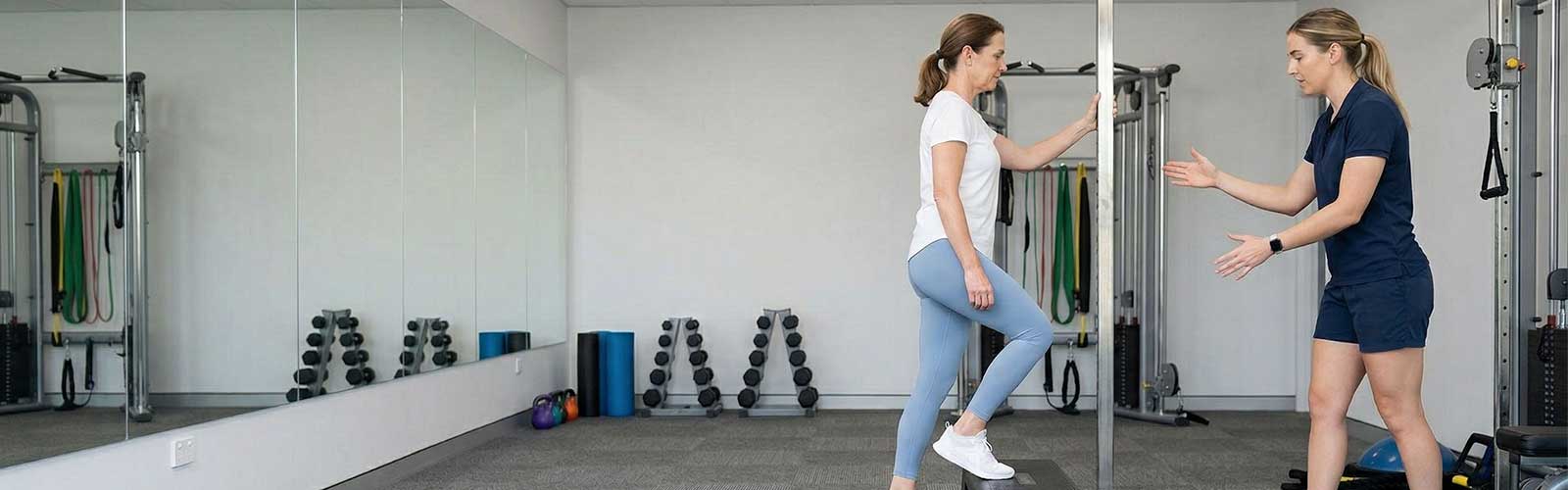
Working 1-on-1 with an Exercise Physiologist makes the process faster and far less frustrating. We assess ankle mobility, calf strength, foot control, hip stability and gait patterns, then we build a plan that matches your lifestyle and flare-up triggers. We also coach technique, because small changes in how you do a calf raise or a split squat can be the difference between progress and irritation.
We’ll set clear progressions, track what changes your pain, and make sure your return to walking, hiking, sport or gym training is structured and safe. The best part is that you’re not guessing week to week. You’re following a plan that evolves as you improve.
A final note
Heel pain can mess with your confidence, especially when it keeps coming back. The good news is plantar fasciitis responds extremely well to the right loading plan. Once the calf, foot and hip are doing their share again, those sharp first steps and post-walk flare-ups usually fade.
If you want help getting on top of it, our team at Inspire Fitness can guide you one-on-one.