
Written by Madison Rohde, Accredited Exercise Physiologist.
Menopause and perimenopause is a natural biological transition marking the end of a woman’s reproductive years. With fluctuating hormone levels, many women experience a range of symptoms as they progress through this transition. Many expect commonly discussed symptoms such as hot flushes and changes in their menstrual cycle, but often have a limited understanding of the broader effects that hormonal changes can have on their bodies — including their bones, muscles, joints, mood, sleep, and overall health.
One of the most significant consequences of menopause is the impact it can have on bone health. The good news is that there are evidence-based strategies that can help women maintain strong, healthy bones and continue living active, independent lives. One of the most effective tools available is resistance training.
What is menopause?
A woman is considered menopausal when she has gone 12 consecutive months without a menstrual period. However, in the years leading up to this, women experience a transition period known as perimenopause. During perimenopause, hormone levels — particularly oestrogen and progesterone — fluctuate significantly.
Oestrogen is often thought of as a reproductive hormone, but its influence extends far beyond the ovaries and uterus. Oestrogen receptors are found throughout the entire body, including in the brain, heart and blood vessels, bones, skeletal muscles, skin, joints and connective tissues, pelvic floor, and digestive system. These receptors allow oestrogen to interact with and support the normal function of many tissues and organs. As oestrogen levels fluctuate and eventually decline during perimenopause and menopause, these systems can all be affected. This is why menopause can present with such a diverse range of symptoms — the hormonal changes are not isolated to one area of the body, they influence multiple physiological systems simultaneously.
What happens to bone during menopause?
One of the most significant health concerns during perimenopause and menopause is accelerated bone loss. Bone is a living tissue that is constantly being broken down and rebuilt. Throughout much of adulthood, this process remains relatively balanced. However, oestrogen plays a crucial role in maintaining this balance by helping to regulate the cells responsible for bone turnover. As oestrogen levels decline, bone breakdown begins to exceed bone formation. The result is a gradual reduction in bone mineral density.
Research has shown that women can lose significant amounts of bone mass during the years surrounding menopause, particularly in the first five to ten years after the final menstrual period. This decline increases the risk of developing osteopenia and osteoporosis — conditions characterised by weakened and brittle bones and an increased risk of fractures.
The consequences can be substantial. Fractures of the hip, spine, and wrist become more common with age and can significantly affect mobility, independence, and quality of life. Importantly, bone loss often occurs silently. Unlike muscle injuries or joint pain, osteoporosis typically develops without symptoms and can go unnoticed until a fracture occurs.
The connection between bone and muscle
Bone and muscle are closely connected. When muscles contract and pull against bone during physical activity, they create mechanical forces that stimulate bone cells to maintain and build bone tissue. In simple terms, bones adapt to the demands placed upon them.
Unfortunately, menopause is often associated with both bone loss and a decline in muscle mass and strength. This combination can increase the risk of falls, fractures, and functional limitations as women age. Maintaining muscle strength is therefore not just about staying fit or looking toned — it is a critical component of preserving skeletal health and physical independence.
Why resistance training matters
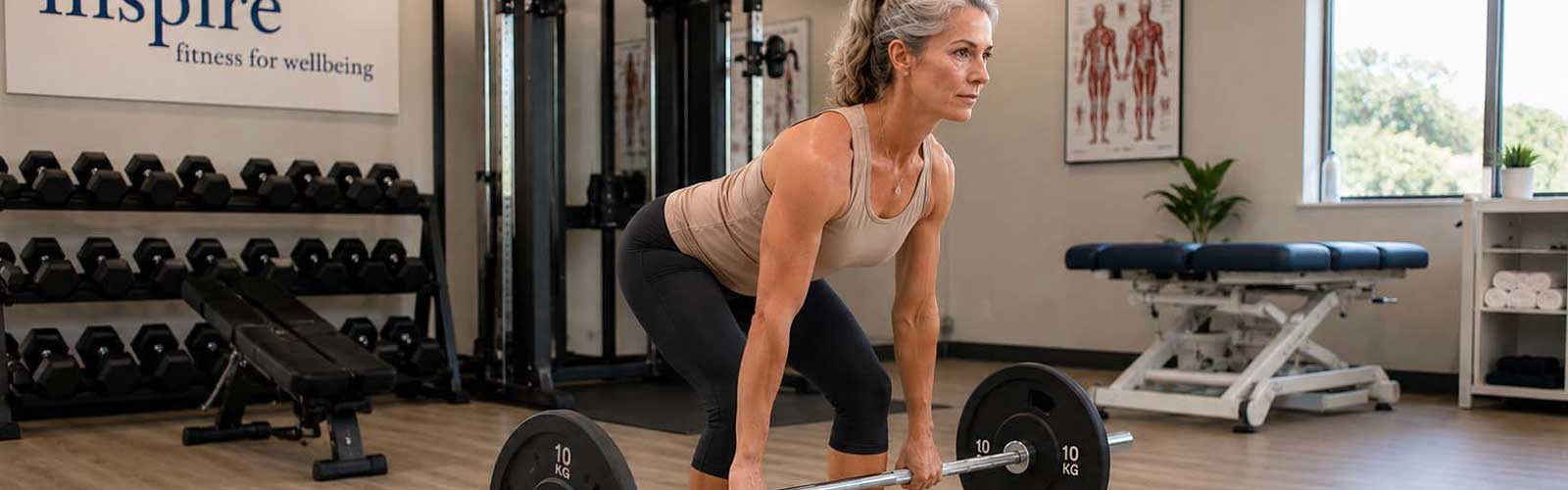
Resistance training is one of the most effective non-pharmacological strategies available to support bone health during and after menopause. Resistance training includes exercises that challenge muscles against an external load, such as free weights, machines, and resistance bands. When performed consistently and progressively, resistance training provides several important benefits — supporting bone density, preserving and building muscle mass, improving balance and reducing fall risk, supporting overall metabolic health, and increasing confidence and quality of life.
Is it too late to start?
One of the most common questions we hear at Inspire is: “Have I left it too late?” The answer is always no. Whether you are entering perimenopause or are many years beyond menopause, strength training can provide meaningful benefits to your bone health. While building bone and muscle is often easier when started earlier, improvements in strength, function, and quality of life can occur at any age. The key is ensuring that exercise is appropriately prescribed, progressive, and tailored to your individual health status, experience level, and goals.
Moving forward with confidence
Menopause is a natural life stage, not a disease. However, the physiological changes that accompany it can influence long-term health outcomes if left unaddressed. Understanding the relationship between hormonal changes, bone health, and physical activity empowers women to take proactive steps toward maintaining their health and independence.
As Exercise Physiologists, we view strength training as much more than a fitness tool — it is an investment in future health. By challenging muscles and bones through regular resistance training, women can help protect their skeletal health, maintain physical function, and continue doing the activities they enjoy for years to come.
If you are approaching menopause, currently navigating it, or looking to improve your bone health after menopause, consider speaking with an Exercise Physiologist at Inspire Fitness about developing a personalised resistance training program that is safe, effective, and aligned with your goals.
Your bones are living tissue. They respond to how you move, how you load them, and how you care for them. The best time to invest in them is now.