
Breath, bracing and functional strength for continence and core stability after 40.
If you’re over 40, the pelvic floor is one of those topics most people think about only when something goes wrong. A leak when you laugh or sneeze. A sudden urge when you get home and put the key in the door. Feeling “unsupported” during exercise. Lower back tightness that never quite settles. For men, it might show up after prostate surgery, with urgency, or with confidence taking a hit when the body doesn’t cooperate.
The thing is, the pelvic floor isn’t a niche “women’s issue” or a one-trick Kegel muscle. It’s a working part of your core system, and it responds well to the right kind of training.
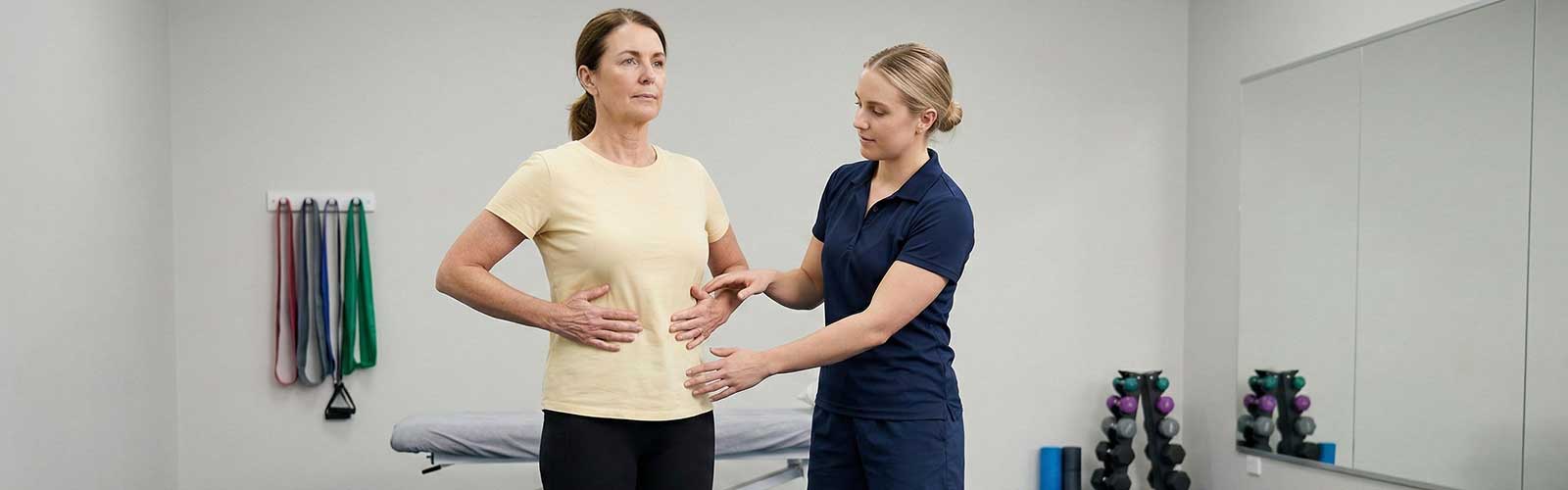
What the pelvic floor actually does
Your pelvic floor is a sling of muscles and connective tissue at the base of the pelvis. It helps with continence, supports pelvic organs, contributes to sexual function, and works with the diaphragm, deep abdominals and back muscles to manage pressure in the trunk. When it’s doing its job well, you don’t notice it. When it’s under strain, overactive, weak or poorly coordinated, you notice it quickly.
Why it becomes more relevant after 40
After forty, a few things can change the demands on this system. For women, pregnancy history, perimenopause and menopause can affect tissue quality, strength and coordination. For men, prostate changes or surgery can alter continence and pelvic floor function. For everyone, years of sitting, stress, breath-holding during lifting, constipation, chronic coughing, weight changes and reduced strength can load the pelvic floor in unhelpful ways.
The result isn’t always “weak”. Sometimes the pelvic floor is too tight and reactive. Sometimes it’s strong but poorly timed. Sometimes it’s simply asked to do too much because the rest of the core and hips aren’t sharing the load.
The “core” is not just abs — it’s pressure management
When people say “tighten your core,” many immediately brace hard, hold their breath and lock everything down. That strategy can increase pressure and push down onto the pelvic floor, which is the opposite of what many people need.
A better way to think about it is pressure management. Your diaphragm (breathing muscle) moves down on the inhale and up on the exhale. The pelvic floor responds with that rhythm. When you learn to coordinate breath with gentle bracing, you create support without clamping down.
Breath: your pelvic floor’s best training partner
Breathing is the easiest entry point because it’s always available. A calm inhale expands the ribs and belly. A long, relaxed exhale naturally engages the deep abdominals and allows the pelvic floor to lift and recoil. You’re not forcing anything. You’re restoring timing.
This matters for continence because leaks often happen when pressure spikes suddenly. Coughing, sneezing, laughing, lifting, jumping or even getting out of a chair can create that spike. If you can exhale through effort and brace gently, the system handles it better.
Bracing: firm, not rigid
Good bracing isn’t a full-body clench. It’s a moderate “belt of support” around the trunk that you can breathe through. Think of it as turning the dimmer switch up, not slamming the light on. When you brace this way, the pelvic floor isn’t left to catch everything on its own.
A simple cue we use is “breathe out and gently tighten around the waist like you’re zipping up snug jeans.” That’s usually enough to support movement without creating excess downward pressure.
Functional strength: the missing link
Pelvic floor outcomes improve when you strengthen the patterns you actually do in daily life. Getting up from a chair, carrying shopping, climbing stairs, hinging to pick something up, and stabilising on one leg all require pressure control and hip strength.
When glutes, adductors and deep trunk muscles do their share, the pelvic floor isn’t constantly fighting a losing battle. That’s why people often notice continence improvements when they start doing well-coached strength training, even if pelvic floor exercises are only part of the plan.
Men and women: similar principles, different contexts
The training principles are largely the same. Breath control, pressure management, and progressive functional strength help everyone. The differences are more about context and triggers.
For women, leaks commonly show up with impact or sudden pressure changes, and menopause can shift tissue resilience. Strength training that builds hip and trunk control, paired with breath-led bracing, can be a game changer for confidence. If there’s a history of prolapse or persistent symptoms, we work closely with pelvic health physiotherapists to ensure the plan suits the individual.
For men, continence issues can occur with prostate enlargement, post-surgery changes, or urgency patterns that disrupt routine. A coordinated approach that includes pelvic floor timing, trunk strength, and graded return to walking and lifting is often the fastest path back to normal life.
In both cases, it’s not about doing endless Kegels in isolation. It’s about building a system that works under real-world load.
What progress looks like
Progress might be fewer “just in case” toilet trips, fewer leaks when you cough, confidence to lift without fear, better support during walks, less back tightness, or simply feeling more stable through the trunk. The wins are often subtle at first, then suddenly obvious when you realise you haven’t thought about your pelvic floor all week — because it’s quietly doing its job.
When to get extra help
If you have persistent pain, heaviness, bulging sensations, blood in urine, new bowel changes, or symptoms that are worsening, you should see your GP and consider a pelvic health physiotherapist. Exercise physiology is a powerful piece of the puzzle, but the best outcomes happen when the right clinicians work together.
Why 1-on-1 Exercise Physiology helps
Pelvic floor concerns are personal. People often feel embarrassed, unsure what’s normal, or worried they’ll make it worse. One-on-one coaching matters because technique and breathing are everything. We can assess how you brace, how you breathe under load, how your hips and trunk move, and where pressure is being mismanaged. Then we tailor a plan that fits your body, your symptoms and your goals.
We also scale exercises properly. The right starting point might be a sit-to-stand with a breath cue, a gentle carry, or a controlled hinge. Over time we build to more demanding strength work and dynamic tasks as your confidence grows. You’re not guessing; you’re progressing.
A calm, strong core is a confident body
Pelvic floor training after 40 isn’t about fear. It’s about capability. When you learn to breathe well, brace smartly and build functional strength, continence and core stability often improve together — and you move through life with less worry and more confidence.
If you’d like a tailored plan, our Accredited Exercise Physiologists at Inspire Fitness can help you one-on-one.