
Training that protects energy, muscle and confidence — before, during and after treatment.
If you’ve just heard the words “you’ll need treatment”, it’s normal to feel like your body is suddenly out of your control. Appointments take over the calendar, energy becomes unpredictable, and simple things like stairs, shopping or a short walk can feel heavier than they should.
This is where cancer prehab and rehab come in. It’s not about “training hard”. It’s about using exercise as a practical tool to help you tolerate treatment better, reduce fatigue, maintain muscle, and get back to living with more confidence.
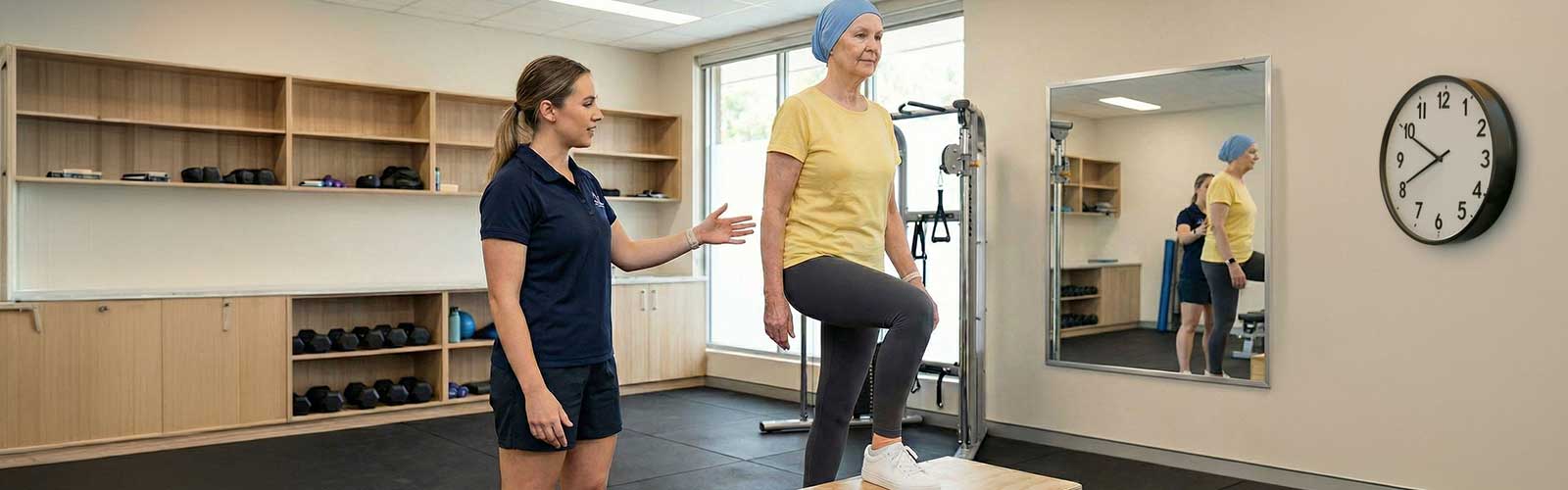
What is prehab, and why does it matter?
Prehab is the work you do before surgery, chemotherapy, radiotherapy or other treatments to build capacity. Think of it like topping up your “fitness savings account” so you can handle the withdrawals that treatment often brings. Even a few weeks of sensible, supervised exercise can improve strength and aerobic fitness, which can translate to better function and an easier recovery curve.
Prehab also helps you practise the basics you’ll rely on later: steady breathing, efficient movement, safe strength work, and pacing. It’s the difference between guessing and having a plan.
What rehab looks like during and after treatment
Rehab is the process of rebuilding once treatment starts, and then again when it finishes. The goal isn’t perfection. It’s progress you can actually feel: less fatigue after daily tasks, steadier legs, better balance, fewer aches from deconditioning, and confidence to move without fear.
The tricky part is that cancer fatigue is not the same as “I’m a bit tired”. It can be heavy, whole-body fatigue that sleep doesn’t fully fix. Counterintuitively, the right dose of movement often helps. Not by smashing yourself, but by keeping your systems active enough that they don’t switch off.
The big three goals: fatigue, muscle and tolerance
Most people coming through treatment run into a similar trio of challenges.
Fatigue tends to increase as treatment progresses, especially if activity drops and sleep quality changes. Gentle aerobic work can help regulate energy, mood and sleep.
Muscle loss can happen faster than many people expect, particularly with reduced appetite, long periods of inactivity, steroid medications, or interrupted routines. Strength training helps protect lean mass, which supports immunity, balance, bone health and independence.
Treatment tolerance matters. When your baseline fitness and strength are better, you often cope better with the day-to-day load of treatment, recover faster between sessions, and keep more of your normal life going.
What exercise actually helps?
A mix of aerobic work, strength training, and mobility tends to work best.
Aerobic exercise doesn’t need to be long to be useful. Walking, cycling, cross-trainer or pool walking can help reduce fatigue and improve cardiovascular capacity. If you’re wiped out, the goal might simply be short, frequent sessions that keep your rhythm alive.
Strength training is your anchor. It protects muscle and supports joint health, posture and stability. We generally focus on the big patterns you need for real life: sitting to standing, stepping, hinging, pushing, pulling and carrying. The loads are guided by your symptoms and recovery, not your ego, and breathing stays smooth to avoid unnecessary strain.
Mobility and gentle range work help you keep moving comfortably, especially through the shoulders, hips and thoracic spine. It also supports better posture and breathing mechanics, which can matter during periods of low activity or after surgery.
How to start safely when you don’t feel like yourself
This is where most people get stuck. They know exercise is helpful, but they don’t know what “safe” looks like when they’re dealing with nausea, low energy, pain, neuropathy, surgical restrictions, or a rollercoaster of good and bad days.
A simple rule we use is: aim for work that feels manageable during, and leaves you no worse tomorrow. If you finish a session and feel ruined for 48 hours, the dose was too high. If you do nothing because you’re afraid of overdoing it, your capacity shrinks. The sweet spot is the repeatable middle.
Common issues we plan around
Over 40, many people already have a few niggles before cancer enters the picture — shoulders that don’t love overhead work, hips that get stiff, knees that complain on stairs, or a back that tightens after sitting. Treatment can also bring new factors that require smart programming.
Peripheral neuropathy can affect foot sensation and balance. We’ll prioritise stable surfaces, careful footwear, and strength work that builds control.
Bone health can be a consideration depending on your cancer type and treatment. We choose appropriate loading and avoid risky movements.
Surgery changes how you move and what tissues need time to heal. We build strength around your restrictions while keeping the rest of the body active.
Lymphoedema risk or management needs thoughtful progression and symptom monitoring. Strength can still be appropriate, but it should be introduced gradually and guided by your clinical picture.
If immunity is low or you’re prone to infections, we’ll adjust environment and intensity, and make sure you have options for lighter days rather than skipping weeks.
The power of micro-progressions
In prehab and rehab, the wins are often small — and that’s exactly why they work. One extra minute walking. One extra sit-to-stand. A slightly slower lower. A little more range without discomfort. These micro-progressions rebuild trust in your body and stack into meaningful outcomes over weeks and months.
They also help psychologically. When so much feels uncertain, having a simple plan with measurable progress can be grounding.
Why 1-on-1 Exercise Physiology makes a difference
Cancer exercise is not one-size-fits-all. Your diagnosis, treatment type, side effects, medications, surgical timeline, and medical team advice all shape what’s appropriate.
In a one-on-one session, an Accredited Exercise Physiologist can tailor a program to your current capacity, teach safe technique, and adjust the dose on the day based on how you’re feeling. We can coordinate with your GP, oncologist or physio when needed, and we track outcomes that matter to you: walking tolerance, strength in daily tasks, balance confidence, and fatigue levels week to week.
The goal is not to “train through” symptoms. The goal is to keep you moving in a way that supports recovery and quality of life.
What progress can look like
Progress might mean you can walk to the end of the street without needing a long rest. It might mean you keep your leg strength through treatment so getting off the couch doesn’t become a struggle. It might mean your fatigue is still there, but it’s less overwhelming, and your sleep improves. It might mean returning to the gym without fear, because you’ve rebuilt your foundation step by step.
A final note
Exercise is not a cure for cancer, but it can be a powerful support through the process. Prehab and rehab give you a way to protect what matters: strength, energy, independence and confidence — at a time when those things can feel fragile.
If you or someone you care about is navigating treatment and wants a safe, personalised plan, our team at Inspire Fitness is here to help.