
Staying healthy — and safely active — through hot Aussie summers
Why hydration matters more after 40
As we get past forty, thirst becomes a blunter signal and we sweat a little differently. Add an Aussie summer and suddenly the usual walk, garden session or gym class can feel twice as hard. Hydration isn’t just about comfort; it’s about blood volume, heart rate, temperature control and brain function. When you’re even mildly dehydrated you’ll notice higher effort, quicker fatigue, fuzzy thinking and a bigger spike in heart rate for the same workload. The fix is simple but strategic: drink enough, time it well, and use electrolytes when the session, weather or your sweat rate calls for them.
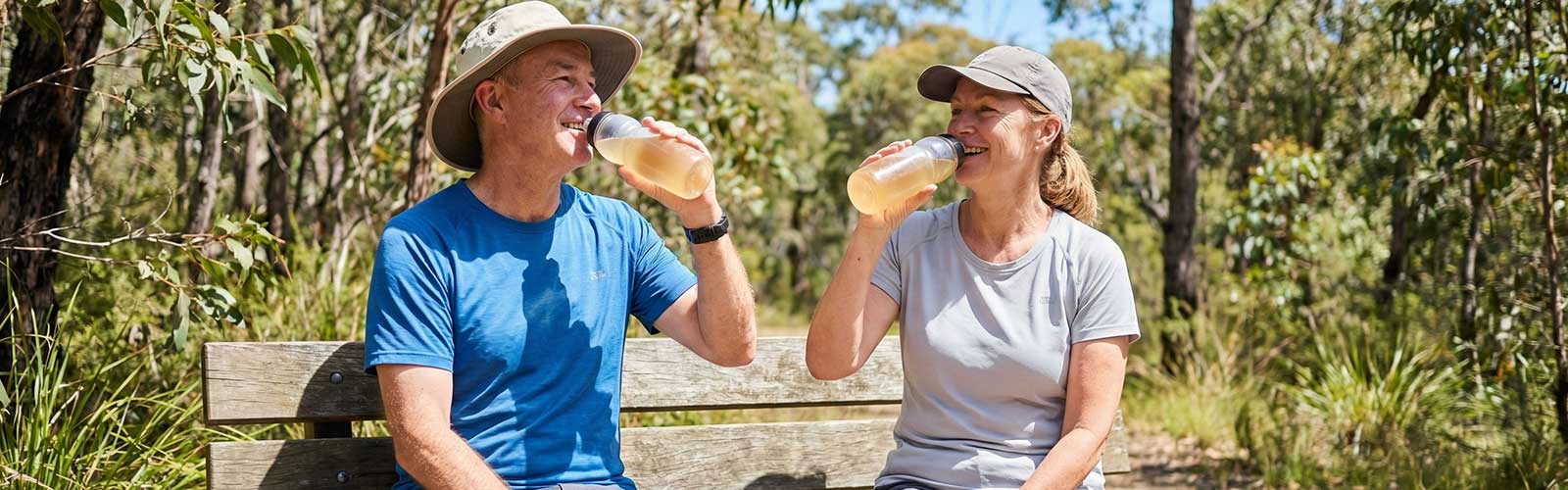
What heat does to your body
Hot days shift more blood to your skin to dump heat, leaving less for working muscles. Sweat evaporates to cool you, but you lose fluid and electrolytes with every drop. If you don’t replace both, core temperature climbs, pace drops and that “flat” feeling arrives early. The good news is your body adapts with a week or two of sensible exposure — you’ll start sweating earlier and more efficiently, and your heart rate will sit lower for the same effort — but you still need a plan.
Water vs electrolytes — what’s the difference?
Water restores fluid. Electrolytes, especially sodium, help you hold onto that fluid and keep nerves and muscles firing. For most everyday movement and short easy sessions, water and regular meals do the job. For longer or hotter efforts — think 45–90 minutes in the heat, heavy sweaters, salty white marks on clothing, muscle cramping, or anyone using diuretics — adding electrolytes makes a clear difference. A useful ballpark is 300–700 mg sodium per litre of fluid during hot-weather training. Potassium and magnesium play supporting roles, but sodium drives the bus.
How much should I drink? A simple plan
Start hydrated: aim for pale-straw urine on waking and sip 500–750 ml across the 60–90 minutes before you train, especially if it’s over 28–30 °C. During exercise, most adults do well with 400–800 ml per hour, adjusting for body size, pace and how much you sweat. After training, replace what you lost by drinking about 1.25–1.5 times the body mass you’ve dropped; if you finished 600 g lighter, target ~750–900 ml over the next couple of hours along with a salty snack or a balanced meal. If you’re out in the garden or working in bursts, use the same rule: drink small amounts often rather than trying to “catch up” later.
Avoid the two big mistakes
Mistake one is under-drinking, which shows up as headache, dry mouth, dizziness, cramps, dark urine and that heavy-legged feeling. Mistake two is only water in large volumes for long, sweaty sessions. That can dilute blood sodium (hyponatraemia) and make you feel bloated, nauseous and confused. The middle lane — regular sips plus some sodium on hot days or longer workouts — is where you’ll feel best.
Training safely through summer
Shift the hard stuff to early morning or evening, choose shaded routes or the local sports oval with a breeze, wear light clothing and a hat, and slow the pace on the hottest days. Break efforts into shorter intervals with planned drink breaks. If you’re new to activity, returning from illness, or managing conditions like heart disease, diabetes or kidney issues, chat to your GP and your Exercise Physiologist before tackling heat. Medications such as diuretics and some blood pressure tablets change fluid and electrolyte needs, so your plan should respect that.
Cramps, headaches and “off” days
Muscle cramps are multifactorial — fatigue, pacing and mineral losses all play a part. Cooling your pace, sipping a drink with sodium, and topping up carbohydrates for longer sessions usually help. Headaches often flag under-hydration; get ahead of them with earlier sipping, a pinch of salt with meals on hot weeks, and cooling strategies like shade and cold towels. If you feel shivery, stop sweating, become confused, or your pulse races despite resting, you’ve crossed into heat illness territory — get out of the heat, cool down aggressively and seek medical help.
How an Exercise Physiologist can help
Hydration and heat tolerance are individual. We look at your training history, job, medications, sweat rate and goals, then build a plan that fits your real life. That might include a simple “AM/PM” drink schedule, electrolyte targets for different sessions, indoor or shaded alternatives when the mercury spikes, and pacing that keeps you improving without wiping you out. We’ll also show you quick checks you can use yourself: morning body mass, urine colour, and how your effort and heart rate respond in the heat. The result is summer training that feels sustainable — not a slog.
Quick self-checks you can use
You don’t need lab gear. If your morning weight is consistently down, your urine is dark, your mouth is dry and your usual loop suddenly feels harder at the same pace, you’re behind on fluids and salts. Start your day with a glass of water, add an electrolyte plan for hot or long sessions, and keep a bottle handy when you’re doing chores outside.
Don’t let it slow you down
After forty, hydration takes a little more intention — and it pays off fast. Match your fluid to the weather and workload, add electrolytes when the session or sweat rate calls for it, and pace training to the conditions. You’ll feel clearer, recover better and keep your summer routine humming without the heat hangover.
If you want a personalised plan for training safely through summer — including hydration, electrolytes and session design — our Exercise Physiologists can help one-on-one.