
Why resistance training is non-negotiable for bone density, mood and weight
This season of life hits differently — and your training should too
If you’re in peri-menopause or menopause, you’ve probably felt the shift. Sleep can get patchy, energy swings from “I could take on the world” to “not today,” and your body composition seems to change even when your food and exercise haven’t. Joints feel a bit creakier, recovery takes longer, and the same workouts don’t deliver the same results. None of that means you’ve “lost it.” It means your physiology is changing — and your training needs to meet you where you are.
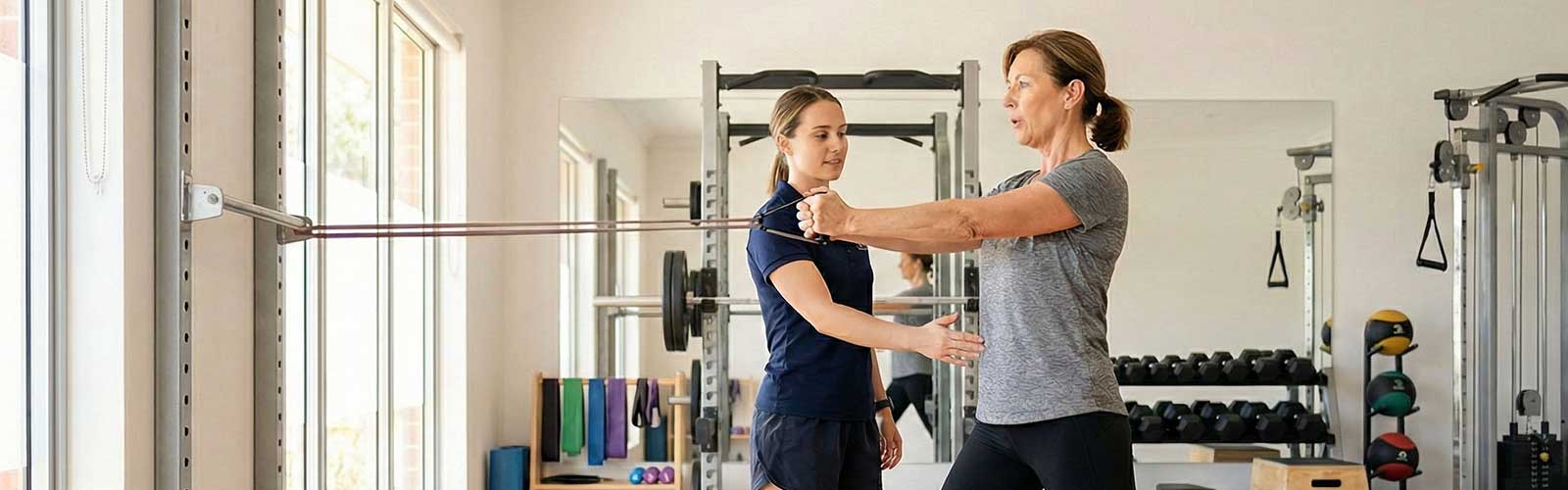
Functional resistance training is the anchor in this season. It protects bone, builds and keeps muscle, steadies mood, and supports a healthier metabolism — without thrashing your joints. Done well, it makes daily life feel easier: carrying shopping, climbing stairs, lifting a suitcase, and getting up from the floor with confidence.
What’s changing under the hood — and why muscle matters more now
Falling oestrogen affects almost everything: bone turnover speeds up, so bone density can drop; insulin sensitivity can slide, so it’s easier to store fat and harder to access fuel; connective tissues feel different, so tendons and joints need a calmer ramp; and nervous-system arousal runs higher, which can show up as hot flushes, sleep disruption, and a shorter fuse. Strength training is your counterweight. Muscle acts like a metabolic engine and a glucose sink, bone loves load that it can adapt to, and your nervous system benefits from the rhythm and predictability of structured work. Translate that into everyday life and you get steadier energy, better blood sugar control, and a body that feels capable again.
Functional strength without beating up your joints
You don’t need maximal loads or complicated gymnastics. Think real-life movement patterns coached well: squatting to a box or chair you can control, hinging with a kettlebell or trap-bar so your back feels supported, pushing from an incline and gradually lowering over time, pulling with rows and pulldowns that let your shoulders sit in a comfortable groove, and carrying weight so your trunk learns to stabilise under load. Add simple single-leg work to sharpen balance and reduce the “wobble tax,” and finish with short, sustainable conditioning that leaves you energised rather than wrecked. The goal is crisp technique, smooth reps, and painless tolerance — then nudge the difficulty by tiny amounts each week.
Micro-progressions: small steps, big pay-offs
After 40, recovery is king. Instead of chasing big jumps, we use micro-progressions. That might be one extra rep, two seconds slower on the lowering phase, a centimetre more range, a minute longer on your walk, or slightly shorter rests between sets. These tiny steps are joint-friendly but incredibly effective. They build strength and capacity without waking up the grumpy shoulder or the temperamental knee. Consistency beats heroics — especially in peri-/menopause.
Bone density, mood and weight: how strength training moves the needle
Load is the language bones understand. Regular, progressive resistance work provides the signal your skeleton needs to hang on to bone mineral density, particularly through the hips, spine and wrists. Muscle mass is the quiet hero for metabolism — more lean tissue means a higher resting energy burn and better glucose control, which helps with weight management and that stubborn mid-section many women notice in this phase. On the brain side of the equation, lifting improves sleep quality, eases anxiety, and steadies mood by nudging neurotransmitters and giving your nervous system something predictable to do. Many women tell us strength days feel like emotional ballast: a grounded hour where you leave clearer than you arrived.
Training through symptoms without losing momentum
Hot flushes, night sweats, brain fog and variable energy are real. Instead of trying to pretend they’re not there, we plan for them. If you’ve had a rough sleep, we keep your movement patterns but trim volume and focus on technique. If energy is high, we ride the wave with a touch more range or an extra set. For flushes, we choose cooler times of day, keep airflow moving, and insert short breath breaks between sets. The point is progress you can repeat — not a perfect week, but a steady month.
Women aren’t small men — what to prioritise now
This phase rewards a “strong hips, strong back, strong core” approach. We like hip-dominant hinges that protect the spine, squats and step-ups that you can control through your knees, rows and pulldowns that strengthen the upper back for posture, and pressing that respects shoulder range rather than forcing overhead angles that pinch. We also coach breathing and bracing strategies that support the pelvic floor, so your lifts feel powerful and secure. Many women benefit from a thread of joint-friendly power — think controlled medicine-ball throws or quicker step-ups — to maintain reaction speed and pep for everyday life. Nutrition and recovery matter more than ever: hit your protein targets across the day, hydrate properly (especially in summer and with flushes), and protect your sleep routine. If you’re discussing HRT with your GP, exercise partners beautifully with that medical plan — we’ll coordinate around whatever you and your clinician decide.
For the fellas in the same household
If you’re reading this alongside a partner in his forties or fifties, know that his needs overlap but aren’t identical. Shoulder and back tightness, waistline creep and blood-pressure nudges are common. He’ll benefit from thoracic mobility, hinge technique that spares the lower back, and a strand of aerobic conditioning to look after heart health. The shared theme is the same: lift well, progress gently, and keep showing up.
Why an Exercise Physiologist makes the difference
Cookie-cutter plans and machine-only circuits can miss the context that matters: your medical history, pain patterns, sleep, stress, cycle of symptoms and the realities of your week. In a one-on-one session with an Exercise Physiologist, we assess how you move, choose variations that feel good in your body, and teach technique so the right tissues take the load. We set progress you can actually recover from, then adjust on the day — if your shoulder is chatty, we find a pain-free path that still builds capacity. Across the weeks we track tangible wins: stronger lifts, better balance, steadier mood, fewer aches, and more “I’ve got this” moments in daily life.
A simple way to start — and stick
Begin with two strength sessions and one short conditioning session each week, then add a third strength day when the habit feels solid. Keep mobility short and purposeful at the start of sessions — ankles, hips and mid-back — then let your first lift double as a warm-up by starting light and building to your working sets. Record the small wins, not just the PBs. If symptoms flare, keep the ritual and change the dose rather than skipping entirely. Your future self is built out of these ordinary, repeatable weeks.
You’re allowed to make this easier on yourself
You don’t need perfect motivation or a clear diary to start. You need a plan that fits your life and a coach who meets you where you are. Resistance training isn’t another box to tick; it’s the foundation that steadies everything else — bones, muscle, mood and metabolism — so you can keep doing the things and being with the people you love.
If you’d like help building a programme around your body and your week, we’d love to work with you one-on-one.